Lanikai's Loop Just Rewrote Its Rules for the Second Time in 54 Years
Blog August 13, 2026
Blog August 13, 2026
At a Kailua Neighborhood Board meeting on Feb. 19, 2026, committee chair Jade Lau described a moment that had happened to her on the Lanikai loop: stopped in traffic, she watched a driver behind her lose patience and try to pass, nearly hitting a child on a bike and the parent walking beside them in the bike lane. She told the board it wasn't really about parking convenience. It was about health and safety.
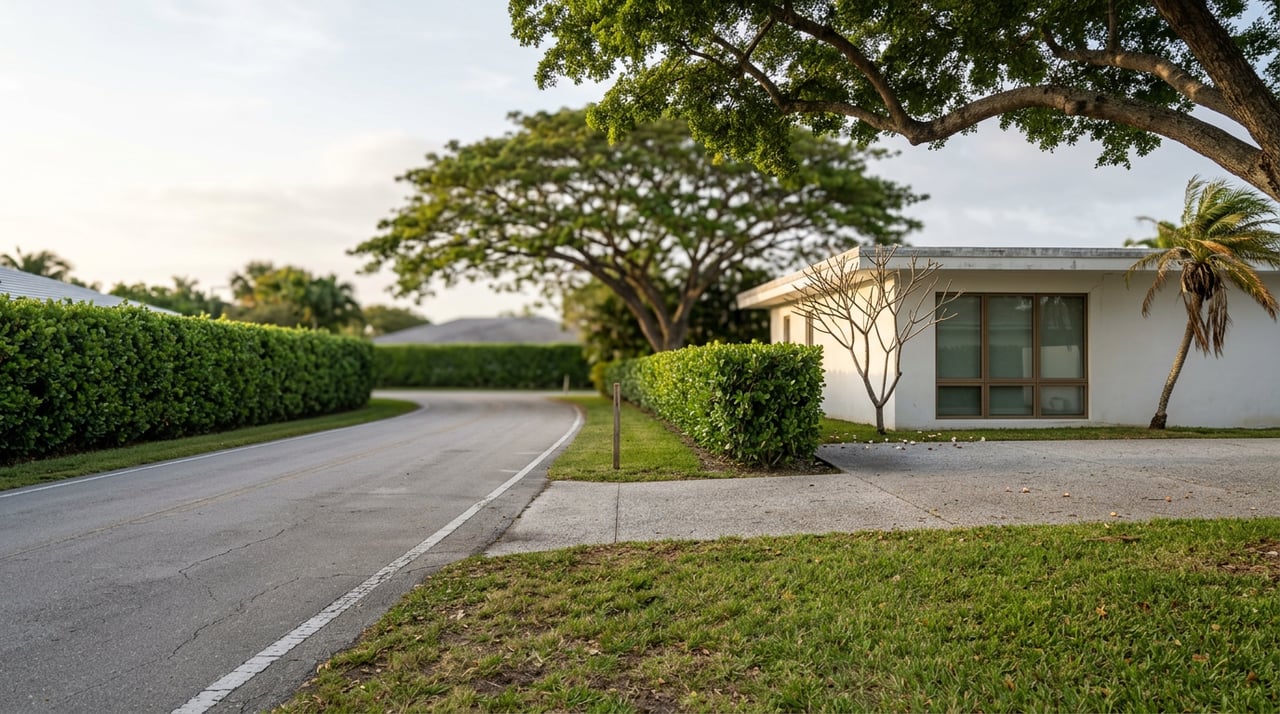
Five months later, on July 1, 2026, the city made the loop's rules match that argument. Parking is now permanently banned, all day, every day, on Mokulua Drive, with Aalapapa Drive following the same rule. The only exceptions are a handful of three-minute loading zones. If you live on or near the loop, this is the first summer in a long time where the street outside your house isn't also a parking lot for people you've never met.
What's easy to miss, if you only read the ban as a traffic story, is that Lanikai's loop has been rewritten this way before. And the reason both changes happened is nearly identical.
The Lanikai Transportation Management Plan, finalized by the city's Department of Transportation Services, replaced a patchwork of holiday-only restrictions with a permanent structure. Here's the version that's actually in effect now, not the earlier draft that circulated in 2025:
Street | Old rule | Rule as of July 1, 2026 |
|---|---|---|
Mokulua Drive | No parking on holiday weekends only | No parking, all day, every day. Three-minute loading zones only |
Aalapapa Drive | No parking on holiday weekends only | Same permanent ban, phased in behind Mokulua |
Cross streets | Unrestricted | One-way conversion. Parking allowed on one side, banned 10 a.m. to 4 p.m. |
Holidays | Barriers on three-day weekends | Same holiday rule, now layered on top of the permanent ban |
That's a meaningfully stronger rule than what the city first floated. The July 2025 draft plan would have restricted loop parking only from 10 a.m. to 4 p.m., not all day. It was residents who pushed for the stricter version. At that same February board meeting, one Lanikai resident put it plainly: no parking at any time, on either side of either drive. The final plan gave them that.
The part of this story that hasn't made it into the parking coverage is that Lanikai's loop was designed around a nearly identical incident more than half a century ago. According to the city's own transportation plan, the Lanikai Bikeway officially opened on July 1, 1972, as the first one-way traffic loop and bikeway of its kind on Oahu. The reason it exists at all was a near-fatal accident: a young Lanikai student's bicycle hit a rock and she fell into the roadway.
That accident is why Mokulua and Aalapapa have run one-way for more than fifty years. The 2026 parking ban didn't invent that structure. It tightened it, for the same underlying reason, on the same calendar date. A near miss involving a child on a bike prompted the original bikeway in 1972. A near miss involving a child on a bike, described by name at a public meeting, helped push the 2026 ban through. Both changes took effect on July 1.
If you've lived on the loop long enough to remember when Mokulua Drive still allowed casual roadside parking outside of holidays, you're now living through the second version of a rule the neighborhood has enforced before, just with different roads and a different vehicle count.
Jon Nouchi, deputy director of the city's Department of Transportation Services, told reporters ahead of the ban that the order of operations mattered. Banning parking along the loop before widening the cross streets could push overflow cars onto side streets illegally, he said, and the city wanted to avoid causing more grief for people who live there.
That sequencing is worth understanding if you live near a cross street rather than directly on the loop. The cross streets are the release valve right now, and they're still narrow. The plan calls for widening them and formally allowing one-side parking there, but that construction phase runs behind the loop ban, not ahead of it. If you live on one of the smaller connector streets between Mokulua and Aalapapa, the next few months are likely to feel different from what your neighbors on the loop itself are experiencing. The quiet arrived first where the ban is strongest. It arrives later, and more gradually, everywhere else.
For years, the practical cost of loop traffic wasn't aesthetic. It was logistical. Tom Cestare, the Lanikai Association's longtime former president, described it in blunt terms to Honolulu Civil Beat: you can't get out, you can't make that appointment. Lanikai Traffic Committee chairman Mike Groza made a similar point about people who work in medicine and live on the loop, and about patients who couldn't reach their own appointments because the only road out was gridlocked.
That's the baseline the July 1 rules are measured against. A few concrete things change now:
Two figures from city officials, cited months apart, show the range of what daily congestion actually looked like before the ban. Hawaii News Now reported in February 2026 that city officials counted roughly 170 cars parked illegally along the loop on a typical day. Kailua Neighborhood Board chair Bill Hicks told Civil Beat in July 2025 that at peak times, as many as 300 cars were jammed into the loop at once.
The gap between those two numbers is the gap between an average Tuesday and a perfect Saturday. Hicks projected that the ban would cut that number by about two-thirds once fully implemented. If his estimate holds, a peak day that once meant 300 cars circling for a spot now means closer to 100, most of them looking for one of the loading zones or the cross-street parking that's allowed outside the 10 a.m. to 4 p.m. window.
None of this shows up in a listing description. It shows up in how long it takes to back out of your own driveway on a Saturday in August, whether the mail carrier can actually reach your box, and whether a Wednesday afternoon canoe practice starts on time. The Lanikai Association has spent years pushing for exactly this kind of structural change, not because the beach needed protecting from its own popularity in the abstract, but because a one-road neighborhood only works if that one road stays passable.
Lanikai has changed its traffic rules once before to protect a child on a bike, and the fix lasted more than fifty years. The current version, built the same way and for the same reason, is five weeks old as of this writing. Whether it holds for another fifty depends on whether the cross streets get widened as planned, and whether the loading-zone system proves workable once the winter surf crowds return without the summer's paddleboard traffic to compare it to.
If you're weighing a move to Lanikai, Kailua, or anywhere else on Oahu's windward side and want a clear-eyed read on how a specific street actually functions day to day, not just what a listing says about it, Drew Read can walk you through it. Let's Connect.
Stay up to date on the latest real estate trends.
Blog
Market Report
Blog
Blog
Blog
Blog
Whether you are buying your dream island home, selling a property, or expanding your investment portfolio, Drew provides the integrity, expertise, and personal commitment to guide you through every step of your Hawaii real estate journey.