Ka Iwi Coast Just Became an Official State Park. Here's What That Does (and Doesn't) Change for You
Blog August 20, 2026
Blog August 20, 2026
If you have tried to book Diamond Head or Hanauma Bay this year, you know the routine. Diamond Head wants a reservation thirty days out. Hanauma Bay opens its booking window exactly 48 hours before your visit, at 7 a.m., and the good time slots are gone before your coffee finishes brewing. Both charge $25 per person for anyone without a Hawaii ID, plus a parking fee, plus a mandatory video before you're allowed near the water.
Then there's the coastline past Sandy Beach, the one most of us in Portlock actually use on a Tuesday evening. No app. No countdown timer. No fee at the gate. You just go.
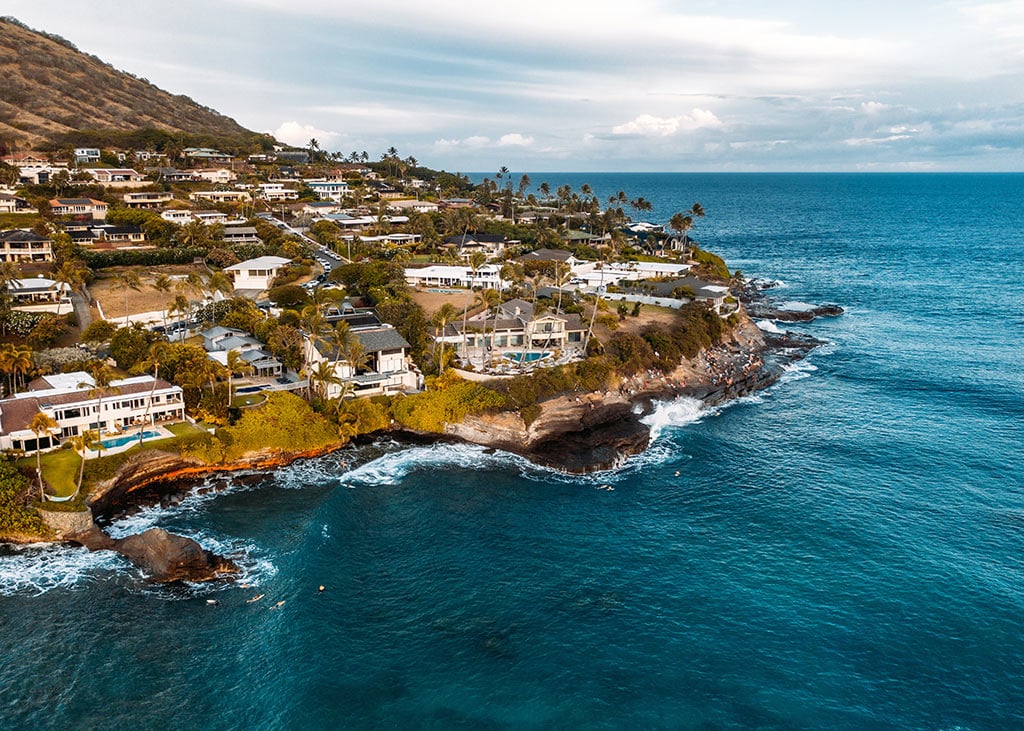
That gap did not happen by accident, and this year it got a little more permanent. The Ka Iwi Coast, the stretch of cliffs and tide pools running from Sandy Beach out to Makapuu, has now been formalized as an official DLNR state park rather than a loosely managed conservation area. For a trail most of us treat as background scenery, that's a bigger shift than it sounds.
Ka Iwi has been protected from development for years, but "protected" and "managed" are not the same thing. The new state park designation puts the coastline under actual DLNR state park rules, with the staffing, enforcement, and access framework that a conservation label alone never provided. The park now formally spans the coastline between Sandy Beach and Makapuu, the same stretch that has drawn hikers, surfers, and dog walkers from this side of the island for decades.
Portlock sits at the base of Koko Head, and the wild coastline most of us think of as ours doesn't actually start at our doorstep. It starts a couple of miles past the crater, once Kalanianaole Highway clears Sandy Beach and bends toward Makapuu. That's the trail you drive past on the way to Costco, the cliffs your visiting family wants to see, the route your dog has memorized on the way to Alan Davis Beach.
The current calm along that coastline is the result of a fight that started long before most current residents moved in. In 2007, a developer floated plans for 180 vacation cabins on two parcels along the mauka side, one behind the Hawaii Kai Golf Course and one across from the Makapuu Lighthouse Trail entrance, complete with tennis and volleyball courts. The state's Office of Planning filed a petition to reclassify the coastline's makai side in January 2009, formally ensuring the shoreline from Hanauma Bay to Makapuu would stay undeveloped. Community groups, chiefly the Ka Iwi Coalition and Livable Hawaii Kai Hui, kept pressure on for years afterward. The mauka parcels, the same ones once slated for cabins, were finally secured for permanent preservation in 2017.
This year's state park designation is the next chapter of the same decades-long project, not a new one. It converts a conservation win that depended on ongoing advocacy into something with an actual management structure behind it.
The contrast is easiest to see side by side. Here's what it currently takes to visit the three coastal attractions closest to Portlock:
Site | Non-resident entry | Parking | Reservation window |
|---|---|---|---|
Diamond Head State Monument | $25 (13 and over) | $3 | 30 days ahead |
Hanauma Bay Nature Preserve | $25 (13 and over) | $3 | 48 hours ahead, opens 7 a.m. HST |
Ka Iwi Coast / Makapuu Lighthouse Trail | Free | Free | None |
Hawaii residents and active military already enter Diamond Head and Hanauma Bay free with ID, so this table is really about what visiting family and mainland friends will run into. Hanauma Bay alone generated an estimated $7.5 million in fiscal year 2025 from entrance fees, gear rental, and concessions, revenue the city now leans on to fund its own repairs. That's the difference between a coastline that pays for its own upkeep through ticket sales and one that still runs on public funding and volunteer labor. As of this writing, DLNR has kept Makapuu Lighthouse Trail free and reservation-free even after the state park upgrade, though its own guidance notes that fees or reservations could be introduced later, consistent with how other protected sites have gone.
The clearest sign that Ka Iwi now has real management behind it showed up earlier this year in the least glamorous way possible: scheduled maintenance. DLNR closed the Makapuu Point Lighthouse Trail until 11 a.m. on three separate Tuesday mornings this spring, May 12, May 19, and May 26, for work that simply would not have happened under the old, informally managed conservation designation. A conservation label doesn't come with a maintenance budget. A state park does.
The other visible change has been on the restoration side. DLNR's Adopt-A-Park partner, the volunteer group 808 Cleanups, has been running organized work days at the Kaloko Inlet this year, focused on pulling invasive grasses and haole koa to make room for native plants to come back. If you've ever wondered who keeps that end of the shoreline from disappearing under weeds, it's neighbors showing up with gloves on a Saturday morning, not a paid maintenance crew.
A few practical notes if you haven't been out that way recently:
If you want to experience this stretch of coast the way it's meant to be seen, without a single car passing you, mark November 22, 2026. That's the date of the annual Kaiwi Coast Run & Walk, a four-mile event that starts at sunrise, roughly 6:45 a.m., at Awawamalu near Sandy Beach Park, with a Hawaiian oli and a conch shell horn before the first steps. The route follows Kalanianaole Highway past Halona Blowhole and Hanauma Bay on its way to a finish at the Hui Nalu Canoe Club halau on Maunalua Bay, passing within a few blocks of Portlock along the way. Entry is capped at 3,000 participants, entries close October 31, and proceeds go to Hui Nalu Canoe Club and other east Oahu community groups. There's an optional champagne brunch add-on at Roy's Hawaii Kai for anyone who wants to make a full morning of it.
August isn't peak whale season here, that runs roughly December through April, but the rest of the coastline doesn't take a break. Monk seals still haul out on the rocks near Alan Davis on their own schedule, the tide pools near Makapuu are worth a look on a calm morning, and if you know what to look for along the trail edges, you'll spot pau o Hiiaka, the blue-flowered coastal morning glory named for Pele's sister, and hinahina, the silvery coastal heliotrope that catches the afternoon light.
Worth noting for anyone weighing a trip to the other side of Koko Head this week: Hanauma Bay has been closed since August 3 for sewer and lift station replacement work and is scheduled to reopen tomorrow, August 12. It's a useful reminder of the tradeoff built into that revenue model. Ticket money funds real infrastructure, but infrastructure eventually needs nine days of closure to get fixed. Ka Iwi's model runs on something slower and less expensive: community groups who fought for forty years to keep the coastline undeveloped, and now show up with work gloves to keep it that way.
That's really the whole story this year. The coastline didn't get busier, more expensive, or harder to reach. It got a real manager, a real maintenance schedule, and a filing cabinet's worth of legal protection it didn't have before. For everyone in Portlock who already treats that stretch of coast as an extension of the neighborhood, the only real change is that it's less likely to ever become anything else.
If you're curious how a shift like this factors into property values on this side of Koko Head, or just want to talk through what's happening in the Portlock market, Drew Read is always happy to talk story. Let's Connect.
Stay up to date on the latest real estate trends.
Blog
Market Report
Blog
Blog
Blog
Blog
Whether you are buying your dream island home, selling a property, or expanding your investment portfolio, Drew provides the integrity, expertise, and personal commitment to guide you through every step of your Hawaii real estate journey.