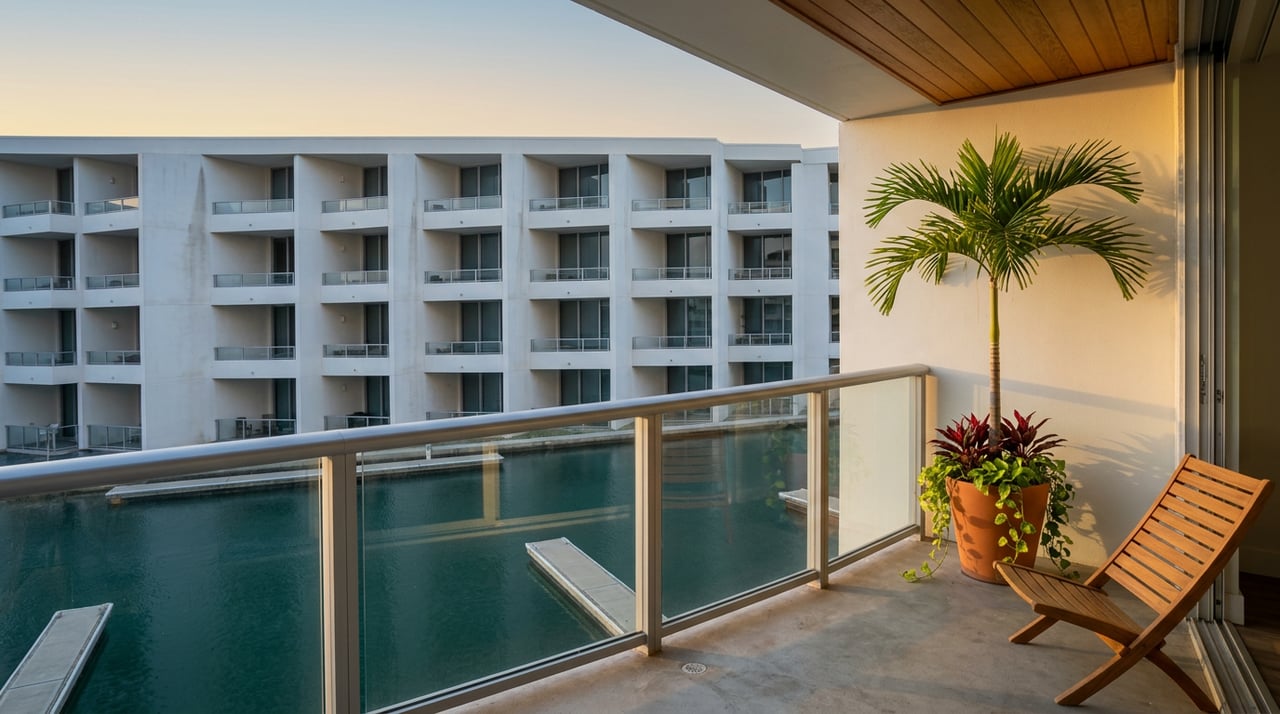
A New Mortgage Rule Is About to Reprice Waikiki's Older Condo Towers
September 24, 2026
September 24, 2026
A buyer makes an offer on a 1970s Waikiki tower priced well below the newer buildings a few blocks away. The unit shows well, the inspection turns up nothing alarming, and the appraisal comes back at value. Then the loan moves into underwriting, and the file stalls on a single document: the association's reserve study. The unit was never the problem. The building's balance sheet was.
That scenario is about to become more common, not less. Starting with loan applications dated January 4, 2027, Fannie Mae and Freddie Mac will raise the minimum share of a condo association's budget that must go into reserves, and buildings that fall short can lose the "warrantable" status that lets any buyer get a standard conventional mortgage there. For Waikiki, where the housing stock spans a 1964 beachfront tower and buildings finished in the last decade, that single lending change is quietly splitting the market into two tiers that price per square foot never shows.
Waikiki condos have looked like a relative bargain for a while. Over the three months ending May 2026, the median sale price in the neighborhood ran around $495,000, at roughly $786 per square foot, itself down about 4.5% from the year before. Islandwide, the condo median sat at $510,000 in August 2026, down 1.0% year over year, according to List Sotheby's International Realty's August 2026 Oahu market report. Days on market for condos improved to a median of 37, down from 48 a year earlier.
Read those numbers side by side and an older Waikiki tower looks like the same product for less money. It usually isn't. Price per square foot measures the unit. It says nothing about whether the association behind it has saved enough to replace the roof, the elevators, or the plumbing before those systems fail, and it says nothing about whether a lender will even write a loan there in 2027.
On March 18, 2026, Fannie Mae and Freddie Mac issued guidance, Lender Letter LL-2026-031 and the parallel Freddie Mac bulletin, raising the required annual reserve contribution for condo associations from 10% to 15% of budgeted assessment income. The new floor applies to loan applications dated January 4, 2027 and after.
An association that doesn't hit that number has one way around it: a reserve study completed within the past three years, funded at that study's own highest recommended level, according to CondoControl. Miss both the contribution floor and the study exemption, and the building risks losing its warrantable status entirely. That isn't a problem for one seller. It's a problem for every owner in the building, because it shrinks the pool of buyers who can get a standard loan there down to cash purchasers and whatever non-agency financing a lender is willing to originate on its own book.
Hawaii's condo law predates this Fannie Mae and Freddie Mac change by two decades, and it sets its own funding target that buyers often assume is stricter than it actually is.
| Funding method Hawaii allows | Statutory minimum | What it means walking into a purchase |
|---|---|---|
| Percent funded | 50% of the reserve study's estimated replacement need | Half the projected cost of major repairs is covered by savings on hand; the rest would come from a special assessment or a loan if a roof, elevator, or pipe system fails on schedule |
| Cash flow plan | 100% of a 30-year income and expense projection | Designed to avoid special assessments over three decades, but a building "100% funded" under this method can still carry a smaller cash cushion today than one tracking toward 70% under the percent-funded method |
State law under HRS 514B-148 lets a board choose either path, and 50% is legally sufficient. According to HOA Reserves, industry practice treats 70% or higher as the healthier target, which is why a building that meets Hawaii's minimum can still fail the new federal warrantability bar. The state legislature seems to have recognized the gap too: Act 296, passed in 2025, created a state-backed condominium loan program specifically so underfunded associations facing major repairs would have a financing option beyond a special assessment. Owners in older Waikiki buildings have already felt what happens without that kind of plan. Assessments of $20,000 to $50,000 have landed on individual unit owners in some older towers, according to reporting from Aloha State Daily.
Waikiki has an added wrinkle worth knowing before you tour anything with "Ilikai" in the name. The Ilikai Apartment Building at 1777 Ala Moana Boulevard, which opened in 1964 as Waikiki's first resort condominium, is a legally separate association from the Ilikai Marina across the street at 1765 Ala Moana Boulevard, which Captain Cook Resorts identifies as not affiliated with the hotel tower despite the shared name. Each has its own board, its own reserve study, and its own capital calendar. The Ilikai Marina posted notice earlier this year of exterior spalling repairs, with weekday construction noise expected to run through October 2026, a reminder that concrete repair on a building this age is a live, funded, in-progress project rather than a hypothetical line item.
Discovery Bay, the twin-tower complex at Ala Moana Boulevard and Hobron Lane built in 1977, raises a different question entirely. Some listings there show the ground lease itself costing owners next to nothing, one recent unit's share ran about $12.62 a month, but leasehold structure narrows the pool of lenders willing to write a loan regardless of how healthy the reserves are. Layer the new federal reserve rule on top of an already leasehold-cautious lender pool, and a building like this deserves two separate rounds of questions, not one.
Neither example is a verdict on either building. They're a reminder that "Waikiki condo" isn't one market. It's dozens of separate legal associations, each with its own reserve math, and the only way to know where a specific building stands is to ask.
Does this rule affect cash buyers? Not directly. Warrantability governs whether a lender can sell a loan to Fannie Mae or Freddie Mac, so a cash purchase sidesteps the immediate underwriting question. It doesn't sidestep the resale problem: if the next buyer needs financing and the building still isn't warrantable, your pool of future buyers shrinks along with your leverage on price.
Does a higher price per square foot mean better-funded reserves? No. Funding percentage and sale price are two separate numbers with no fixed relationship. The only way to know a building's reserve health is to read the study itself.
Is this a Waikiki-only issue? The lending rule is national. It matters more in Waikiki because the neighborhood has an unusually wide range of building ages in a small area, from mid-1960s towers to recent construction, so the gap between well-funded and underfunded associations shows up more starkly here than in newer submarkets.
A building's reserve study takes longer to read than a listing sheet, but it tells you more about what you're actually buying. If you're comparing Waikiki towers and want a second set of eyes on what a specific building's numbers mean for your financing and your resale position, Drew Read has spent years reading these buildings from the inside, not just the listing photos. Let's Connect.
This article is general information, not legal, tax or financial advice. Consult a qualified professional about your situation.
Stay up to date on the latest real estate trends.
Blog
Market Report
Blog
Whether you are buying your dream island home, selling a property, or expanding your investment portfolio, Drew provides the integrity, expertise, and personal commitment to guide you through every step of your Hawaii real estate journey.