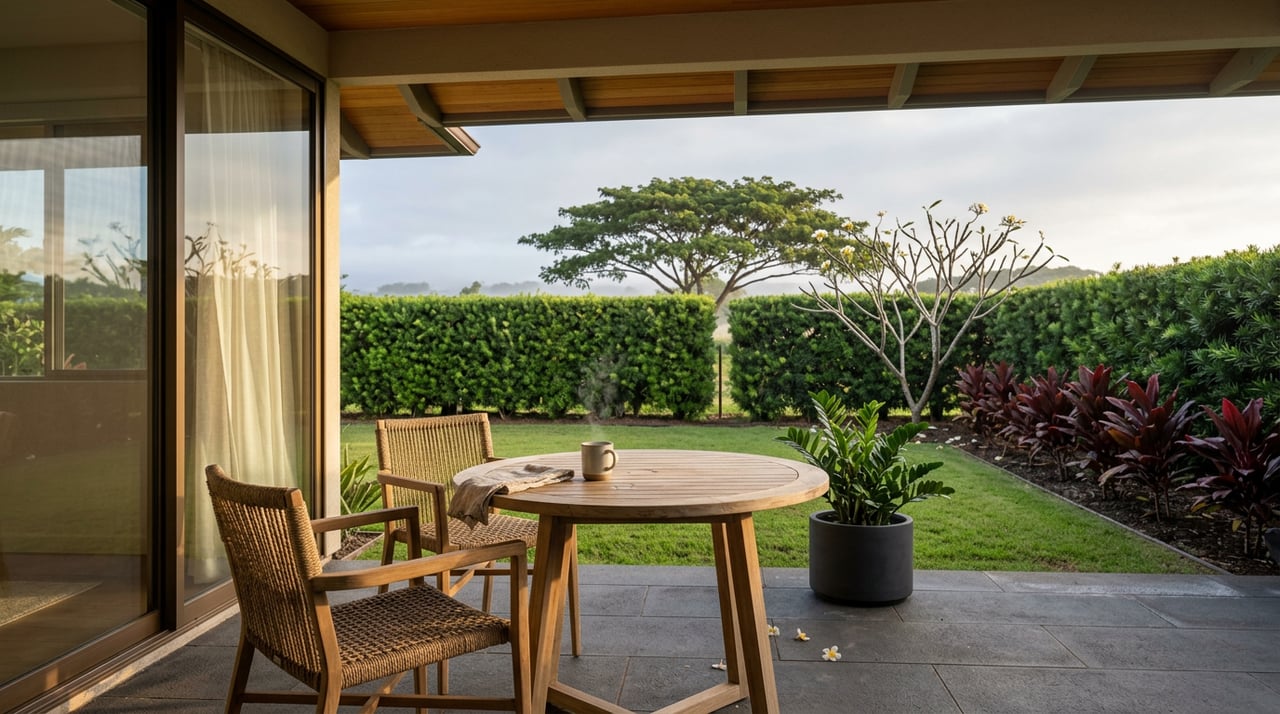
Diamond Head's Farmers Market Runs on Two Clocks, and Locals Know Which One to Follow
Blog August 27, 2026
Blog August 27, 2026
At 7:15 on a Saturday morning, the lower lot at Kapiolani Community College is already half full of cars, and the market hasn't opened yet. Vendors are still snapping up canopy legs and stacking crates of papaya. Fifteen minutes later, at 7:30 sharp, the gates open and a different market begins than the one most people describe when they talk about KCC.
There is a widely repeated fact about this market that everyone gets right: it is Oahu's oldest farmers market, running since September 2003. What gets missed is that the market people write about online, the crowded one with long lines and Instagram photos of dragon fruit, is not the same market that residents of Diamond Head, Kaimuki, and Kahala actually use. The two overlap in the same parking lot for three and a half hours, but they run on different clocks, and knowing which one you're in changes everything about how the morning goes.
The Hawaii Farm Bureau Federation runs KCC along with three other Oahu markets, and the organization itself has been around since 1948, decades before any of its farmers markets existed. That history matters less for trivia than for what it tells you about how the place is run: this isn't a pop-up event chasing foot traffic, it's a standing piece of agricultural infrastructure that happens to also feed a neighborhood.
Show up at 7:15 and you get a version of the market that never makes it into a travel guide. The produce tables are fully stocked because nothing has sold yet. You can walk the center aisle without turning sideways. The vendors who sell out of specific items by 9am, the ones with the best mangoes or the last of a small avocado harvest, still have full crates. By 9:30, when the tour buses and rideshares from Waikiki are dropping off in volume, that same walk takes three times as long and half the tables are already thin.
If you're heading to Diamond Head State Monument afterward, there's a resident-only detail worth knowing: Hawaii residents with a valid state ID are exempt from the crater's reservation and entry fee system that non-residents have to book 30 days out. It's a small thing, but it's one more way the neighborhood functions differently for the people who actually live in it than for the people visiting it.
Here's the part that surprised me when I looked into it: the Hawaii Farm Bureau Federation maintains an active waitlist for vendor spots at its markets. New vendors get added only when the organization has room and reaches out. That means the roughly 70 to 80 vendors setting up canopies most Saturdays are not a rotating cast auditioning for space. They've earned it, and they tend to stay.
That stability is what makes it worth learning names instead of categories. Chef Sharon, an original KCC vendor, still sells her oatcakes, rum cakes, and musubi from the same stall she's had for years. There's a vendor selling hand harvested honey sourced from hives on Windward Oahu, Molokai, and the Big Island. There's a coffee stand pouring Ka'u coffee, the award winning variety grown on the southern tip of the Big Island, alongside coffee jelly made from the same beans. None of these are seasonal novelties. They're fixtures, and the waitlist is why.
The stall version of a restaurant is usually a preview, not a footnote. Pig and the Lady, now a Chinatown restaurant hard enough to get a table at that people plan around it, still runs a tent at KCC, and the line for it moves the way you'd expect for a place with a real reservation problem downtown. Crepes Hawaii, North Shore Cattle Co., and Guava Smoked all draw their own steady crowds inside the market, the kind of following that predates most of the market's tourist recognition. KCC's own culinary program runs a table too, which means the students training a few buildings away are selling pastries to the same neighborhood that will eventually eat at whatever restaurant they end up cooking for.
This is the detail that separates a resident's mental map of the market from a visitor's. A tourist sees a food stall. Someone who's been coming for years sees the early stage of a restaurant they'll end up going to on a Tuesday night three years from now.
The produce at KCC follows Hawaii's actual growing seasons, and once you track it for a year, the pattern becomes something you can plan around instead of stumble into.
Coconuts, pineapple, and papaya show up year round regardless of season, which is part of why first time visitors assume the market never changes. It does. You just have to be there enough Saturdays in a row to notice the tables turning over.
None of this is a reason to move here. It's a reason to notice something about how the neighborhood already works if you're in it. The market isn't one thing. It's an early, working version of itself for people who show up before the gates technically open, and a later, denser version for everyone arriving after 9. The vendors who make the market worth returning to aren't cycling through on a seasonal rotation, they're the same people who've been there long enough to have a waitlist behind them. And the food you're eating out of a tent on a Saturday morning has a real chance of being the same food you'll be waiting in line for at a real restaurant a few years later.
If you already live within walking distance of Monsarrat Avenue or the Diamond Head Road corridor, none of this requires a car, a reservation, or a plan. It just requires showing up before the rest of the island does.
If you're weighing what it actually means to live in this stretch of Honolulu, from the daily rhythms to the property side of things, Drew Read has spent years working this exact pocket of the island and is glad to talk through what you're seeing on the ground. Let's Connect.
Stay up to date on the latest real estate trends.
Blog
Market Report
Blog
Blog
Blog
Blog
Whether you are buying your dream island home, selling a property, or expanding your investment portfolio, Drew provides the integrity, expertise, and personal commitment to guide you through every step of your Hawaii real estate journey.