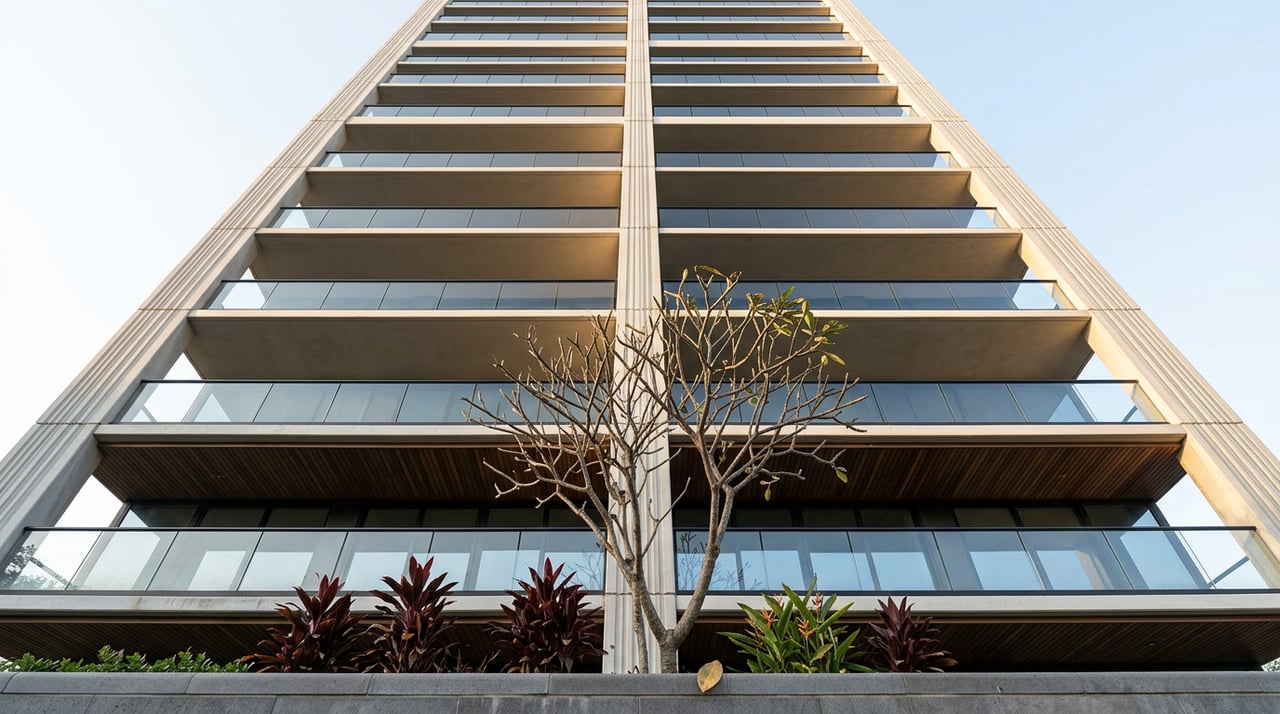
Kakaako's Flood Map Just Moved. Your HOA Fee Hasn't Caught Up Yet.
September 17, 2026
September 17, 2026
If you've been comparing condo listings in Kakaako against other parts of Oahu, you've probably done the obvious math: price per square foot, monthly HOA fee, maybe a rough guess at property tax. That math felt complete a year ago. It isn't anymore.
On June 10, 2026, new FEMA flood insurance rate maps took effect across Oahu, changing the flood designation for more than 3,500 parcels island-wide. Kakaako's flat, low-lying blocks are among the areas that shifted into higher-risk zones. That single date matters more to a condo buyer's monthly carrying cost than the number printed on the listing, because the HOA fee you're looking at right now was set before the remap and before most buildings' next reserve study. It's a photograph of a moment that has already passed.
A review of Oahu condo listings from early 2026 found a median advertised HOA fee of $882 a month, nearly double the $526 median that Honolulu County reports across all housing types. That gap exists partly because newer high-rise buildings, the kind concentrated in Kakaako and Ward Village, tend to carry the highest fees of any product type on the island. Bigger amenity packages, larger insured structures, and younger reserve funds all push the number up before you factor in anything unusual.
What the listing doesn't show you is direction. Two things are actively pushing that number higher for buildings in Kakaako specifically, and neither shows up until you ask.
The flood map update wasn't a minor redraw. According to the Hawaii Insurance Commissioner's office, the FEMA revision moved thousands of Oahu parcels into Special Flood Hazard Areas for the first time, some in zones that require specific construction standards and mandatory flood coverage for federally backed mortgages. Kakaako's low, flat terrain puts it among the neighborhoods carrying the AE designation, a zone with a defined base flood elevation and mandatory coverage requirements, rather than the lower-risk X zone many buyers assume applies to a modern high-rise built on fill.
Shane Choi, an account executive in the AOAO unit at Atlas Insurance, told a Honolulu television station the remapping "could have a major impact on property owners, especially those with federally backed mortgages," touching budgeting, lending, and condo communities all at once. That's the part worth sitting with. A flood zone change doesn't just affect the ground floor commercial space or a garden-level unit. It changes what the association's master insurance policy costs to underwrite, and that cost gets divided across every owner in the building through the monthly fee, whether your unit is on the third floor or the thirty-third.
Here's roughly how the zone categories break down and what each one tends to mean for a building's insurance obligations:
| Flood Zone | Typical Risk Level | What It Usually Triggers |
|---|---|---|
| Zone X | Minimal to moderate | Flood coverage optional, often skipped |
| Zone A / AO / AH | High risk, no or shallow base flood elevation | Mandatory flood insurance for mortgaged units |
| Zone AE | High risk, defined elevation | Mandatory coverage, stricter building standards |
| Zone VE | Coastal high-velocity | Highest premiums, most restrictive construction rules |
Buyers with mortgages who get newly mapped into a flood zone face an average premium around $868 a year for the required coverage, according to Hawaii News Now's reporting on the statewide remap. That's the individual owner's slice. The association's master policy, covering the whole structure, moves on a different and larger scale, and that's the number that lands in your HOA fee.
There is a small window worth knowing about if your building was newly mapped: property owners who secure a flood policy within 12 months of June 10, 2026, may qualify for a Newly Mapped Discount, a detail worth raising directly with the building's insurance agent rather than assuming it applies automatically.
Flood risk explains why insurance premiums are climbing. Hawaii's reserve funding law explains why that increase can sit quietly inside your fee for years before anyone tells you about it.
Under HRS Chapter 514B, every Oahu condominium association has to build its annual budget around a formal reserve study, and if that study wasn't originally prepared by an independent specialist, the law now requires an independent review at least once every three years. The statute also requires a 30-year cash flow projection, up from the 20-year standard that used to apply, and it sets a funding floor: associations must collect enough to cover at least 50% of the study's estimated replacement reserves, or 100% if they're using the newer cash flow method.
That 50% figure is the detail most buyers miss. The industry's own benchmark for a healthy reserve fund is closer to 70% funded. Hawaii's law sets a legal minimum well below what professionals in the field consider adequate. A building can be fully compliant with state law and still be carrying meaningfully more special assessment risk than a 70%-funded peer down the street. The law tells you what's required. It doesn't tell you what's comfortable.
Layer the insurance story on top of that. Statewide property insurance premiums rose 13.4% in 2024, the largest single-year jump in at least a decade, and the Kona Low storms that hit Oahu in March and April of 2026 are still working their way through insurer repricing. Some relief is arriving. The state's Hawaii Hurricane Relief Fund has been reactivated and is reportedly delivering savings of up to 70% on hurricane premiums for qualifying condo associations, and Act 296 expanded the Hawaii Property Insurance Association's authority to offer coverage when the private market pulls back. Whether a specific Kakaako building has applied for either program is exactly the kind of question a reserve study update and an insurance renewal notice will answer, and exactly the kind of question a listing sheet never will.
Ward Village is still adding inventory. As of mid-2026, Kalae is roughly 85% sold, Ālia sits around 86%, and The Launiu is actively selling, all developed by Howard Hughes Corporation. On the Kamehameha Schools side of the district, the Kobayashi Group's Our Kakaako tower reached the high floors of its structure this spring, with first units closing later this year.
None of these buildings has been through a full reserve cycle yet. That's not a red flag, it's simply a different kind of unknown than what you'd find in a tower that's been standing for five or ten years. A newer building has a fresh reserve study and presumably a fresh insurance policy underwritten after the June 10 remap, which can actually work in a buyer's favor. An older, fully sold-out building has something a new tower can't offer: a track record. You can ask for its special assessment history. You can see whether its reserve percentage has been climbing or slipping. You can find out whether its last independent study happened on schedule.
Neither situation is automatically better. They're different categories of diligence, and conflating them is how buyers end up comparing two numbers that don't measure the same thing.
A few questions matter more than the fee line on the listing sheet, and none of them require a specialist to ask, just the discipline to request the documents before you're under contract:
None of these questions are unusual to ask. They're the same questions a lender's underwriter will eventually ask when reviewing the association's financials for your loan approval. Asking them earlier just means you're not surprised later.
The sticker price and the advertised HOA fee tell you what a Kakaako condo costs today. They don't tell you what it will cost in eighteen months, once the next reserve study reflects a post-remap insurance renewal. The reserve percentage funded, the flood zone status as of June 10, and the building's participation in the state's new insurance relief programs are the numbers that actually predict where your monthly payment is headed. In a neighborhood adding this much new supply this quickly, that distinction is worth more than another few minutes spent comparing price per square foot.
Does every Kakaako building's flood zone change with the June 10 remap? No. The remap affected specific parcels based on updated hydrology and elevation data, not a blanket neighborhood-wide reclassification. Each building's status has to be checked individually against the current FEMA maps.
If my building wasn't newly mapped, does any of this still apply to me? Yes, indirectly. Statewide insurance repricing after the 2024 premium jump and the 2026 Kona Low storms affects renewal costs for buildings across risk categories, not just newly mapped ones.
Can I get a reserve study or flood zone answer before making an offer? Most listing agents can request the association's most recent budget summary, reserve study, and insurance declarations page as part of your due diligence period. Asking for these before you write an offer, rather than after, gives you room to negotiate if something looks thin.
If you're weighing a Kakaako purchase against other parts of Oahu and want a second set of eyes on a specific building's reserve position or insurance status, Drew Read can help you read the documents that matter before you sign anything. Let's Connect.
Stay up to date on the latest real estate trends.
Blog
Market Report
Blog
Blog
Blog
Blog
Blog
Blog
Whether you are buying your dream island home, selling a property, or expanding your investment portfolio, Drew provides the integrity, expertise, and personal commitment to guide you through every step of your Hawaii real estate journey.