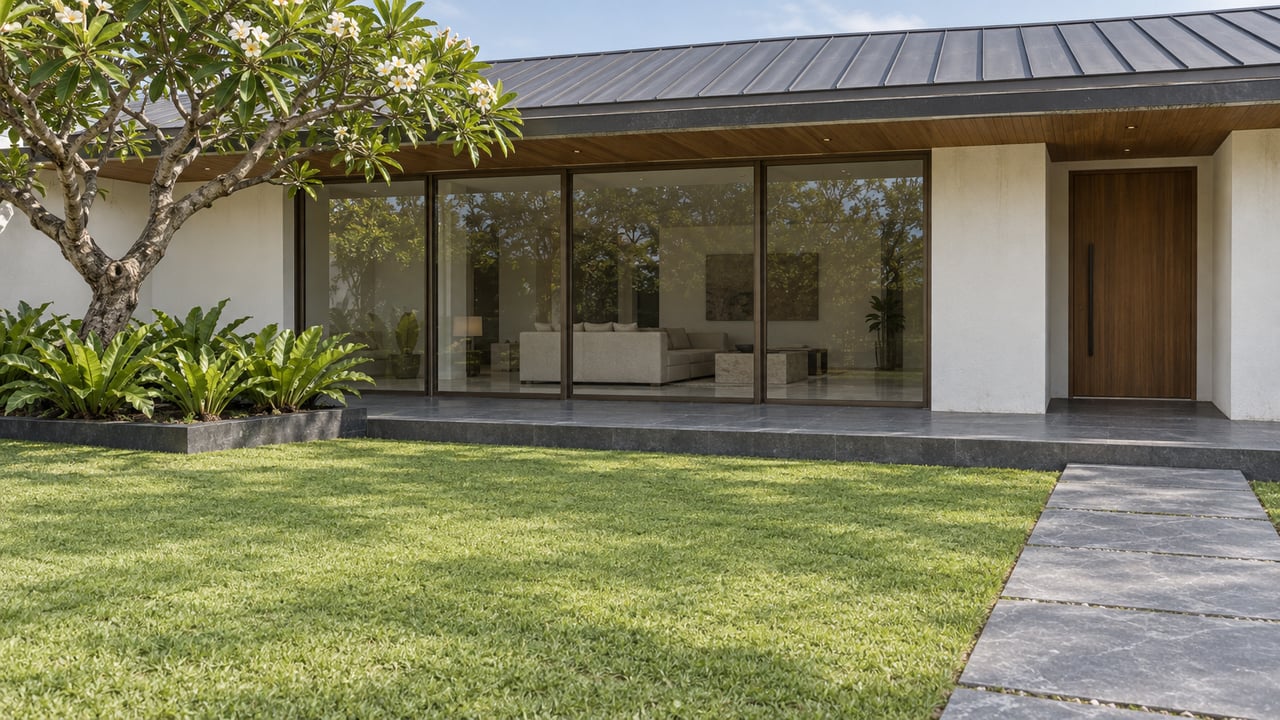
In Kailua, the Lot Size Doesn't Decide Whether You Can Build a Second Unit
October 22, 2026
October 22, 2026
A Kailua listing on a lot of 5,000 square feet or more invites some quick arithmetic. Under Honolulu's current rules, a lot that size can carry an accessory dwelling unit of up to 1,000 square feet, so the price seems to cover a rental, a place for a parent, or a future resale story. That arithmetic covers one input. The others are the sewer line that leads to a treatment plant under federally ordered repair, an occupancy rule that changes who can own the property, a coastal permit layer covering part of town, and a state deadline arriving December 31 that the Honolulu City Council has formally asked to repeal.
For a buyer comparing Kailua homes this fall, the second unit is a set of separate approvals. Each one can say no on its own terms.
Honolulu's Ordinance 25-2 was signed January 3, 2025, and the city says most of its land-use amendments took effect September 30, 2025. It allows an ADU of up to 500 square feet on lots up to 4,999 square feet and up to 1,000 square feet on lots of 5,000 square feet or more. It permits one ADU per lot, and an ʻohana unit that is otherwise permitted on the lot does not count against that limit. The Department of Planning and Permitting's public FAQ still lists the older 400 and 800 square foot caps and a one-additional-unit rule. Anyone researching a property should read the ordinance text itself.
Subsection (G) of that same section matters more than the size limits. ADUs are permitted "only where there is sufficient infrastructure, including but not limited to wastewater treatment and disposal and water supply, as well as adequate roadways and first-responder resources." The lot size sets the maximum. The infrastructure review decides whether any unit gets built.
| What a buyer wants to know | What actually decides it | Where it gets answered |
|---|---|---|
| How large can the unit be? | Lot area under Ordinance 25-2 | Zoning lot records |
| Can it be built at all? | Sewer, water, road and responder capacity | DPP ADU pre-check and Sewer Capacity Analysis |
| Who can live where? | Owner-occupancy and six-month rental minimum | DPP rules and a recorded restrictive covenant |
| Does coastal review apply? | Special Management Area status | City SMA map, parcel by parcel |
| Could a subdivision rule block it? | Private covenants, especially those recorded before 2024 | Title and subdivision documents |
DPP will not issue an ADU building permit until it has confirmation from its Wastewater Branch, Traffic Review Branch, the State Department of Health and the Board of Water Supply. The department's FAQ says plainly that sewer and water capacity "varies from location to location." The process starts with an approved ADU or ʻohana pre-check, which is valid for 210 days after the first agency approval. New structures also need an approved Sewer Capacity Analysis.
In Kailua, that sewer review leads to the Kailua Regional Wastewater Treatment Plant. It serves Koʻolaupoko communities including Aikahi Park, Enchanted Lake and Lanikai, and processed 10.77 million gallons per day in calendar year 2024. In June 2026, Hawaii News Now reported that the city broke ground on $85 million in upgrades there. The work includes a $61 million dewatering building and a $23 million renovation of two biotowers, ordered by the U.S. Environmental Protection Agency after discharges off Kailua in 2023 showed high bacteria levels. Both projects are expected to be finished in early 2029.
No ADU moratorium tied to the plant has been reported. The upgrades do explain why capacity questions come up in Kailua's public discussions. In October 2025, the Kailua Neighborhood Board listed sewer capacity among the open questions while weighing a proposed 60-foot building on Kuʻulei Road. Islandwide, Civil Beat reported in August 2025 that sewer capacity is one of the reasons ADUs don't get built. Only 1,320 had been built since the program was restored, about half the yearly target in the city's 2014 plan. DPP Director Dawn Takeuchi Apuna described it to Civil Beat as "not really a super successful program."
Getting through the infrastructure review leads to a second set of conditions, and these narrow who the property works for. Under the rules set out in DPP's ADU FAQ, either the ADU or the main house must be occupied by the owner, a relative of the owner, or an authorized representative. Exceptions are limited to hardships such as active military deployment. An ADU cannot be rented for less than six months. Before the permit is issued, the owner records a declaration of restrictive covenants with the Bureau of Conveyances or the Land Court. That recorded declaration then stays with the property and passes to the next buyer.
For a second-home buyer, those conditions change the plan. A seasonal owner who intends to rent out both the main house and a new ADU while living elsewhere doesn't fit the occupancy rule. Short-term income doesn't fill the gap either. The DPP FAQ says rentals of less than 30 days are permitted only in resort-zoned areas, subject to registration, with specified exceptions such as existing nonconforming use certificates. The city's effort under Bill 41 to raise the minimum to 90 days was blocked in court, so the 30-day threshold stayed in place. The ʻohana unit, the other route, is limited to family occupancy.
These rules make a Kailua second unit mainly an asset for owners who live on the property: a long-term rental, space for multiple generations, or a cottage for downsizing. Its value to a buyer depends on whether that buyer will live there.
The state has already gone further than Honolulu's ordinance. Act 39 of 2024, signed May 28, 2024, requires each county to allow at least two ADUs, "or the reasonable equivalent," on residentially zoned lots. The act also includes a fallback for counties that miss the deadline:
If a county does not adopt or amend zoning ordinances pursuant to this section by December 31, 2026, the county shall not deny any permit application on the basis of exceeding the maximum number of housing units allowed if any owner... of a single-family dwelling in a residentially zoned lot applies for construction of up to two accessory dwelling units... provided that a county may deny a permit application on the basis of infrastructure, design, or development standards.
The final clause matters most in Kailua. The fallback removes the unit-count limit and keeps the infrastructure review, so the sewer question covered above still applies to a second ADU. Act 39 also doesn't apply within Special Management Areas. Its limit on private covenants applies only to covenants recorded after the act took effect. Older subdivision restrictions are excluded.
Honolulu has opposed the mandate. On October 1, 2025, the City Council adopted Resolution 25-271, which approved a proposal for the 2026 Hawaiʻi State Association of Counties legislative package to repeal the county ADU requirements. The resolution argues that Act 39 imposes uniform density "without affordability safeguards." A separate repeal measure, HB516, shows a last status entry of "Carried over to 2026 Regular Session" on December 8, 2025, and no act number. Maui County went the other way. Hawaii News Now reported that Maui's ordinance allowing up to two accessory dwellings on qualifying residential lots took effect July 8, 2026, in response to Act 39.
As of this writing, no Honolulu compliance ordinance has surfaced in city records. A buyer closing in November or December is buying a lot whose unit count under state law could change ten weeks after this post runs, while its infrastructure review stays exactly the same.
Kailua's coast brings in a permit layer that most inland neighborhoods don't face. DPP's coastal area permits page says a Special Management Area permit is generally required for "development," which includes construction, grading, or a change in the intensity of land use. Coverage is determined parcel by parcel through the city's SMA map or HNL Build. An exemption for up to two dwellings under 7,500 square feet doesn't extend to shoreline lots.
These reviews happen in public. In August 2024, a Kailua Neighborhood Board committee reviewed a proposed house with an ADU on Kailua Road and recommended conditions including limits on excavation and changes to the foundations. That same report covered conditions for a large residence's SMA application on Kaelepulu Drive. For lots near the beach or the pond, a second unit can mean a public hearing process on top of a permit counter visit.
Timing is the practical issue. In August 2026, the Honolulu Board of Realtors reported an Oʻahu single-family median sale price of $1.24 million, up 12.2% from a year earlier. Median days on market fell to 17 from 22. Those are islandwide figures, but the pace matters in Kailua. A typical listing goes under contract well before any agency could sign off on an ADU pre-check. A buyer who includes a future unit in the price usually has to make that bet before the agencies weigh in.
What can be gathered before an offer:
This is general information about how the rules are written, not legal, tax or financial advice. A land use attorney, architect or tax professional can confirm how they apply to a specific parcel and situation.
If you're weighing a Kailua home and want the ADU question checked before you commit to a price, Drew Read can help you put those documents in order and read them alongside the comps. Let's Connect.
Stay up to date on the latest real estate trends.
Blog

Market Report
Blog
Whether you are buying your dream island home, selling a property, or expanding your investment portfolio, Drew provides the integrity, expertise, and personal commitment to guide you through every step of your Hawaii real estate journey.